
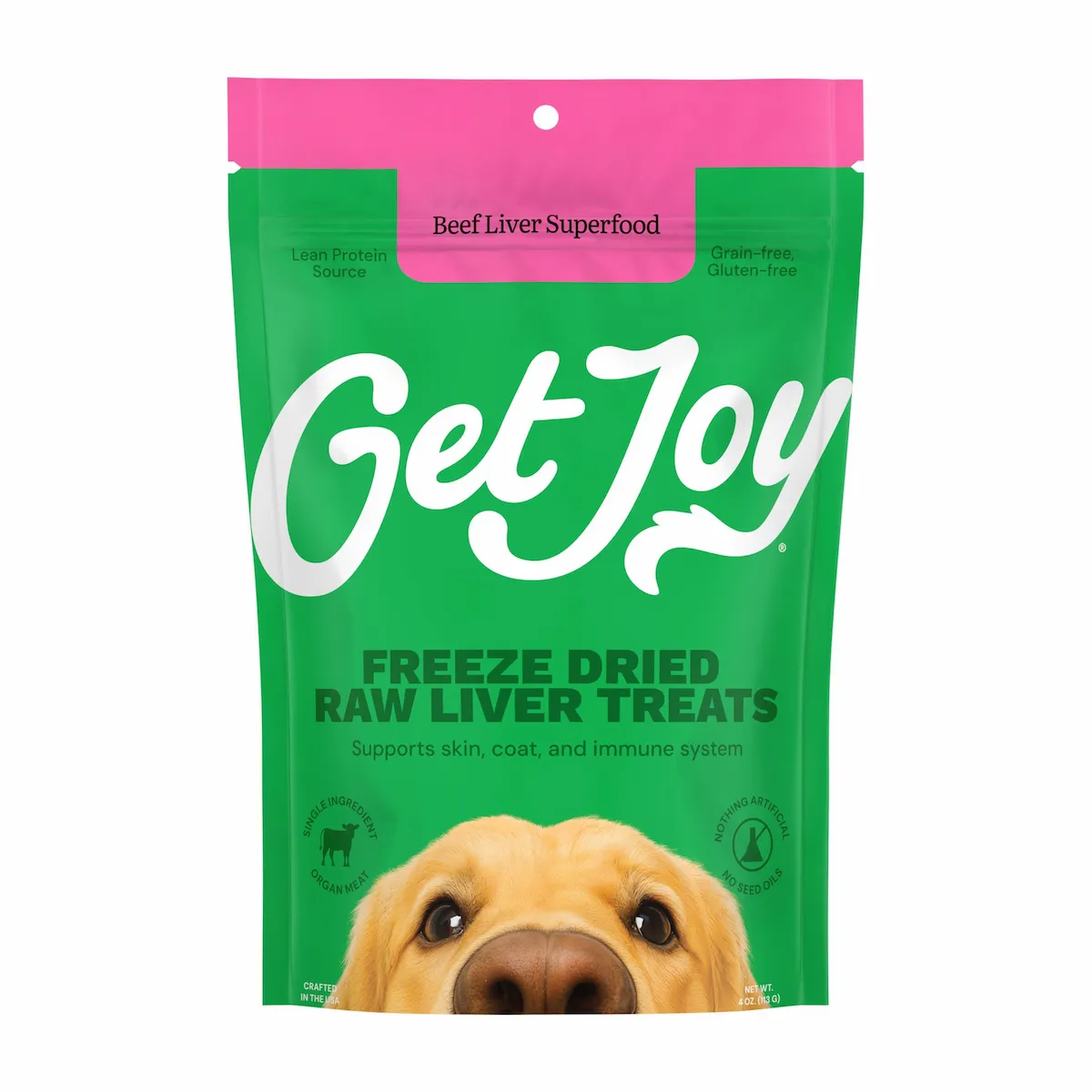
Freeze Dried Raw Liver Treats
4 OZ. (113 G)
One ingredient. That is the whole recipe. Get Joy freeze dried organ treats are exactly what the name says, with nothing added to bulk them out or hold them together. Organ meat is one of the most nutrient dense things a dog can eat, naturally rich in iron, vitamin A and B vitamins that support vision, immunity and a healthy coat. Freeze drying keeps that intact while making the treats light, clean to handle and shelf stable, so they work as well in a training pouch as they do in the treat jar. They break apart easily, which makes them high value for training without overfeeding. Crumble them over dinner as a meal mixer or raw topper when a dog needs convincing, or hand them over whole as a reward. Because there is only one protein and nothing else, they are straightforward to use with dogs on limited ingredient diets. Suitable for puppies through seniors and every size of dog. Resealable packaging keeps what you do not use today just as good next week. Common questions we get: yes for puppies, just break them smaller; yes for dogs on limited ingredient or elimination diets, because there is only one protein and nothing else in the bag; and yes as a topper, because they crumble easily over any food. They are shelf stable, so the bag lives in the cupboard rather than the fridge. Get Joy makes food and treats we would feed our own dogs, with ingredient lists short enough to read out loud. Joy starts from within.
Questions about Freeze Dried Raw Liver Treats
- What's in Freeze Dried Raw Liver Treats?
- Ingredients: Beef Liver.
- What size and case pack?
- Size: 4 OZ. (113 G).
- Where is it distributed?
- Through KeHE, in the North East, East, South East, Central and West regions.